

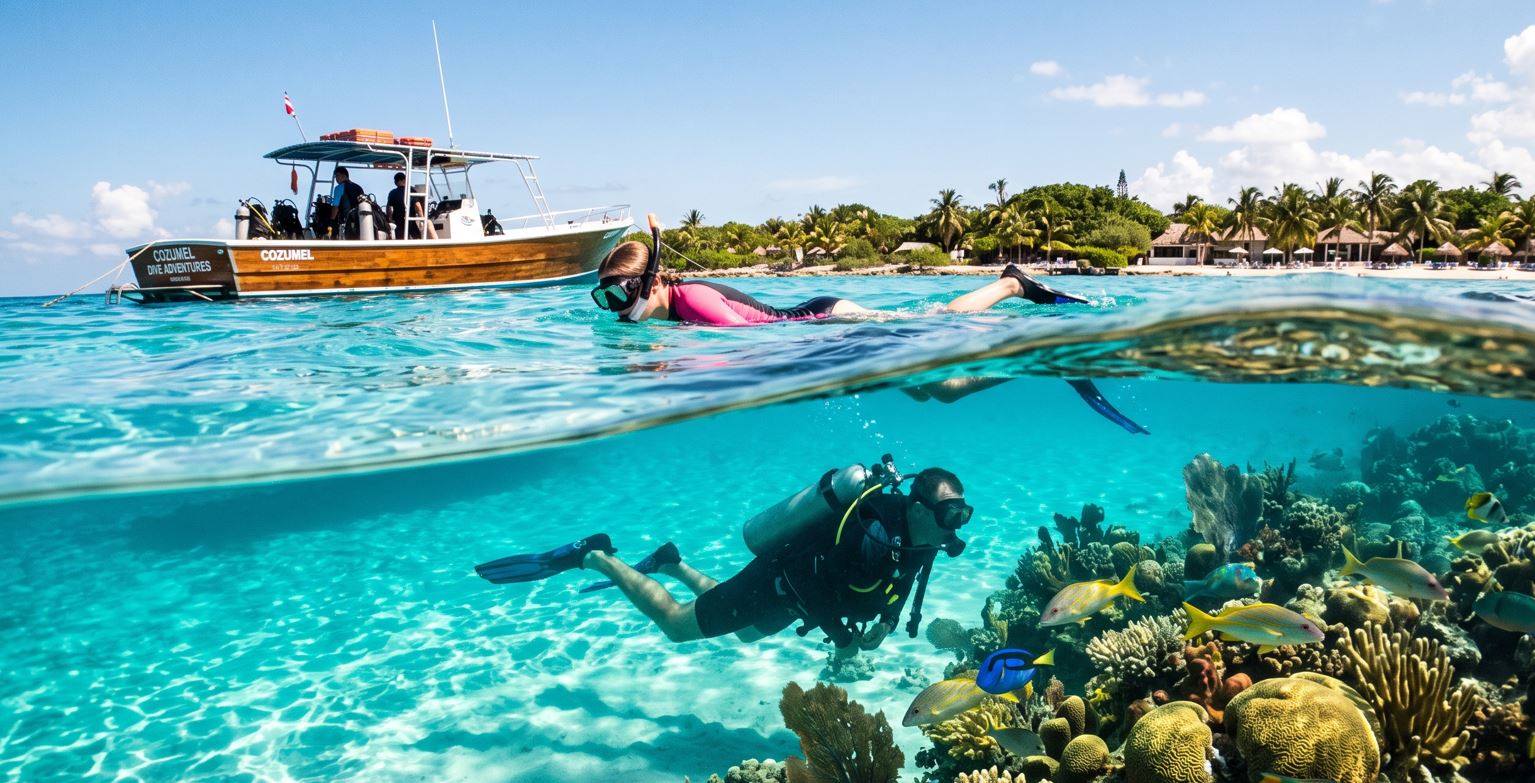
Forget the guesswork. Cozumel’s sea hugs the shore at a balmy 78°F to 84°F (25.5°C – 29°C) all year long — and yes, even in January you can wade in without a wetsuit. I’ve logged more than 50 dives here and countless lazy snorkel sessions, and I can tell you the water is almost never “cold” by any reasonable standard (unless you’re a lizard). But the real question isn’t if you can swim — it’s how you’ll feel doing it. That depends on the month, the trade winds, and what you plan to do underwater.
Below, you’ll find an interactive tool that matches your travel month and activity — snorkeling, scuba, or plain splashing — to a personal comfort score. Give it a whirl. Then stick around because I’m about to break down exactly what to expect every season, what gear actually makes sense, and the data you need to plan like a local.
Data sourced from historical oceanographic records and real‑time readings — like those from NOAA’s Caribbean buoy network (Station 42056). No simulated fluff, just verified sea surface temperatures.
First, the hard numbers. Here are the long‑term monthly averages (ocean surface, °F and °C):
Cozumel Average Water & Air Temperatures
Now let’s talk about what those numbers actually mean when you’re bobbing at the surface or descending to the deeper reefs.
Winter (December, January, February)
Here’s where the “Is Cozumel water temperature in January too cold to swim?” panic usually comes from — cruise ship passengers sprinting off the pier on a 72°F morning, only to realize the sea is 79°F (26°C) and feels like bathwater compared to the breeze. The water temperature in Cozumel in December and January hovers around 79–80°F, which is objectively warm.
However, this is the season of the Nortes (strong northerly winds). These weather systems can kick up overnight, making you shiver the absolute second you climb out of the water and onto the boat deck. My advice? Your best investment for a winter trip isn’t a thicker wetsuit; it’s a high-quality windbreaker or a dive boat jacket for the surface intervals. I’ve done a two‑hour drift dive in February wearing only a 3mm shorty. Underwater: bliss. Surface interval: teeth‑chattering. Winter is perfect for swimming once you’re in — just plan your exit strategy.
Spring (March, April, May)
If someone asks, “Is it too cold to swim in Cozumel in March?” I laugh. By March the sea creeps to 80°F (26.5°C), and spring brings glassy‑flat mornings and blistering afternoon sun. This is the season I tell friends to book if they want maximum water time — warm enough to stay submerged for hours, not yet the sticky “soup” of the deep summer.
April and May edge into the low 80s, and visibility often hits 100+ feet thanks to predictably calm currents. Snorkelers, take note: you can float face‑down over starfish and sea turtles until your back is sun‑kissed and you’ve drained an entire tube of reef‑safe sunscreen. Photographers love this window because the sunlight penetrates perfectly through the unruffled surface.
Summer (June, July, August)
Summer turns the ocean into what I affectionately call “bathtub mode.” Water temps hover at 84°F (29°C) — sometimes a notch higher in the extreme shallows — and you barely feel a temperature difference when you jump in. It’s glorious. This is when even the most cold‑averse souls stay in the water until their fingers prune.
But there’s a catch: the heat above water can be brutal. Hydrate like it’s your job and don’t underestimate how much energy you lose when your body doesn’t have to work to stay warm. For divers, this is 3mm shorty territory, or just a rash guard and board shorts if you’re perfectly comfortable. Just be mindful of jellyfish, which can occasionally ride the warmer summer currents.
Fall (September, October, November)
Cozumel water temperature in September stays glued to 84°F (29°C), October drops just a hair to 83°F (28.5°C), and November settles into a still‑summery 81°F (27°C).
What about the rainy season? Sure, scattered afternoon downpours are incredibly common in September and October. But here is the secret most tourists don’t realize: during a rainstorm, the ocean is actually the warmest place to be. The ambient air drops, the heavy rain feels cool on your skin, but the sea remains a balmy 84°F. Sinking beneath the surface feels like sliding into a heated pool. The fresh rain water sits on top of the heavier salt water, sometimes creating a slightly blurry, mesmerizing “halocline” in the top three feet, but visibility holds completely steady once you descend past it.
The elephant in the room is hurricane season. Storms rarely hit Cozumel head‑on, but even a distant system can churn up the water. I track forecasts obsessively in September, not because the sea temperature drops, but because I want that crystal‑clear visibility Cozumel is famous for.
Diving Deeper: Thermoclines and Specific Reef Conditions
Many divers worry about hitting a wall of freezing water at 60 feet. In places like California, or even some cenotes on the mainland Riviera Maya, thermoclines (sudden, sharp drops in temperature) are a real shock to the system.
Cozumel is wonderfully different. Thanks to the steady, powerful flow of the Yucatán Current, the water column is constantly mixed. Whether you are snorkeling at 5 feet in the Columbia Shallows or drifting along the dramatic, towering coral formations of Palancar Reef at 80 feet, the temperature remains remarkably consistent. You might experience a marginal drop of 1°F to 2°F (about 0.5°C to 1°C) at depth, but it is rarely enough to require a different wetsuit strategy. The current does the work of distributing the Caribbean heat from the surface down to the sand.
What to Wear in the Water: Snorkeling vs. Scuba Diving
Here’s where I’m going to take a stand: packing the wrong exposure gear is the #1 preventable buzzkill I see on the island. You don’t need a thick neoprene onesie to survive Cozumel’s water, but the right layer can stretch a one‑hour swim into a four‑hour aquatic bender.
Best Gear for Snorkelers and Casual Swimmers
For 90% of snorkelers, a UV‑protective rash guard is all you need — December through August. It blocks the sun, prevents microscopic stingers, and adds just enough insulation to keep you comfortable if you drift over a slightly cooler upwelling. I wear a long‑sleeve hooded rashie and board shorts even in January. If you’re the type who runs cold, add a 0.5mm neoprene top — the kind surfers wear — and you’ll feel invincible.
- Spring to fall: Rash guard + swim leggings (sun protection wins).
- Winter months: Add a light neoprene jacket if you’ll be out for more than an hour; the air feels cooler after sunset.
Side note: Reef‑safe sunscreen is non‑negotiable. The Mexican Caribbean has strict regulations against oxybenzone and octinoxate to protect the coral. Pack mineral sunblock or buy it locally on the island.
Best Wetsuits for Scuba Divers
Cozumel’s dive boats are full of opinions. I’ll give you the practical truth from 50+ dives navigating these specific reefs.
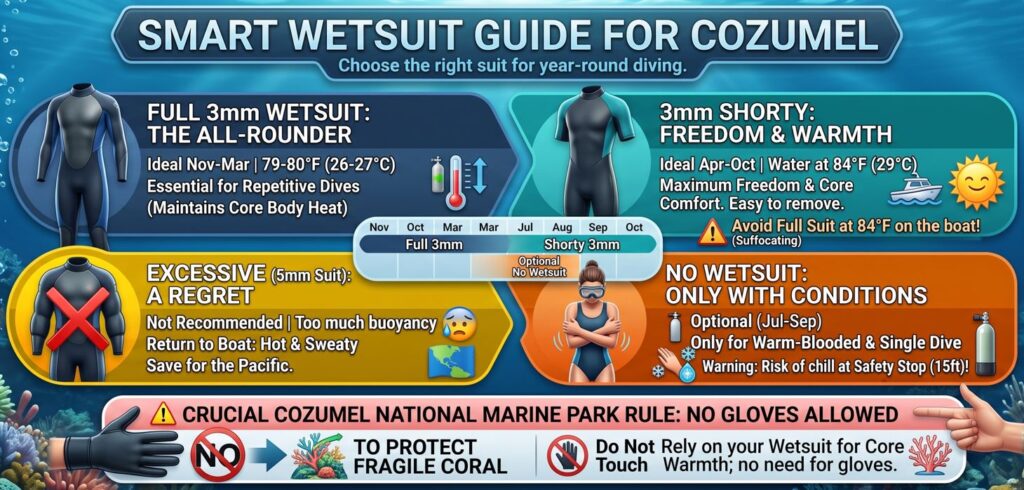
- 3mm full suit — My year‑round workhorse. Perfect from November to March when the water is 79–80°F, and you’re doing repetitive dives. Remember, body heat drains fast after the second tank, no matter how warm the water feels initially.
- 3mm shorty — Awesome for April–October. You get core warmth but total freedom of movement, and it’s incredibly easy to peel off during surface intervals. When the water hits 84°F, a full suit can feel suffocatingly stuffy on the boat ride.
- 5mm — Overkill. I see cold‑water divers show up with 5mm suits, and they deeply regret it. You’ll be overly buoyant, sweating profusely on the boat, and perfectly warm in a 3mm anyway. Save the thick neoprene for the Pacific Ocean.
- No wetsuit? Totally doable July–September if you’re a warm‑blooded human and only doing a single tank. I’ve done it; just know you might catch a slight chill on the 15-foot safety stop after 60 minutes underwater.
- Gloves are Banned: It is highly important to note that the Cozumel Reefs National Marine Park strictly prohibits the use of diving gloves. This rule prevents divers from touching and damaging the fragile coral. Do not rely on gloves for warmth; keep your core warm with the right suit, and your extremities will be fine.
Frequently Asked Questions
Almost certainly. Cozumel’s sea surface rarely drops below 78°F (25.5°C) even in the dead of winter, which is significantly warmer than most heated backyard pools. Unless a rare, severe winter cold front just blew through, you’ll find the water very inviting. Check our interactive tool at the top of the page for the current feel‑like reading based on today’s averages.
72°F (22°C) feels brisk at first, and many people start shivering after 20–30 minutes without neoprene. But here’s the crucial context for your trip: Cozumel almost never hits 72°F. The lowest historical monthly average is 79°F (26°C). If you’re comparing this trip to a spring‑fed lake in the US or the Pacific coast — don’t. You are in the deep tropics.
For today’s live reading, use our embedded widget above — it calculates the latest data so you don’t have to dig. Alternatively, you can check the raw data from NOAA buoy station 42056 in the Caribbean, or look at local Cozumel dive shop social media pages, which often post real‑time dive computer readings every morning.
Not noticeably. Due to the strong Yucatán current, the water is constantly mixed. You won’t experience the harsh thermoclines found in other dive destinations. The temperature at 80 feet on Palancar Reef is usually within 1°F to 2°F of the surface temperature.
Share Your Cozumel Experience
So now you’ve got the hard numbers, the seasonal breakdowns, and the practical gear guide. But the real texture comes from the people who’ve waded into these waters before you.
When did you visit — that sweltering August week, or a breezy, unpredictable February morning? Did you pack a wetsuit, or did you dive right in wearing nothing but a swimsuit and a rash guard?
Drop a comment below and let other travelers learn from your adventure. Tell us the month, your chosen activity, and whether you felt like a tropical fish or a popsicle on the boat ride back. I read every story — and honestly, I might steal your packing list for my next trip.