
Let’s rip the band-aid off right now so we don’t waste your valuable time. If you are a business owner, HR manager, or founder frantically Googling to see if the government will foot the bill for your staff’s sick leave…
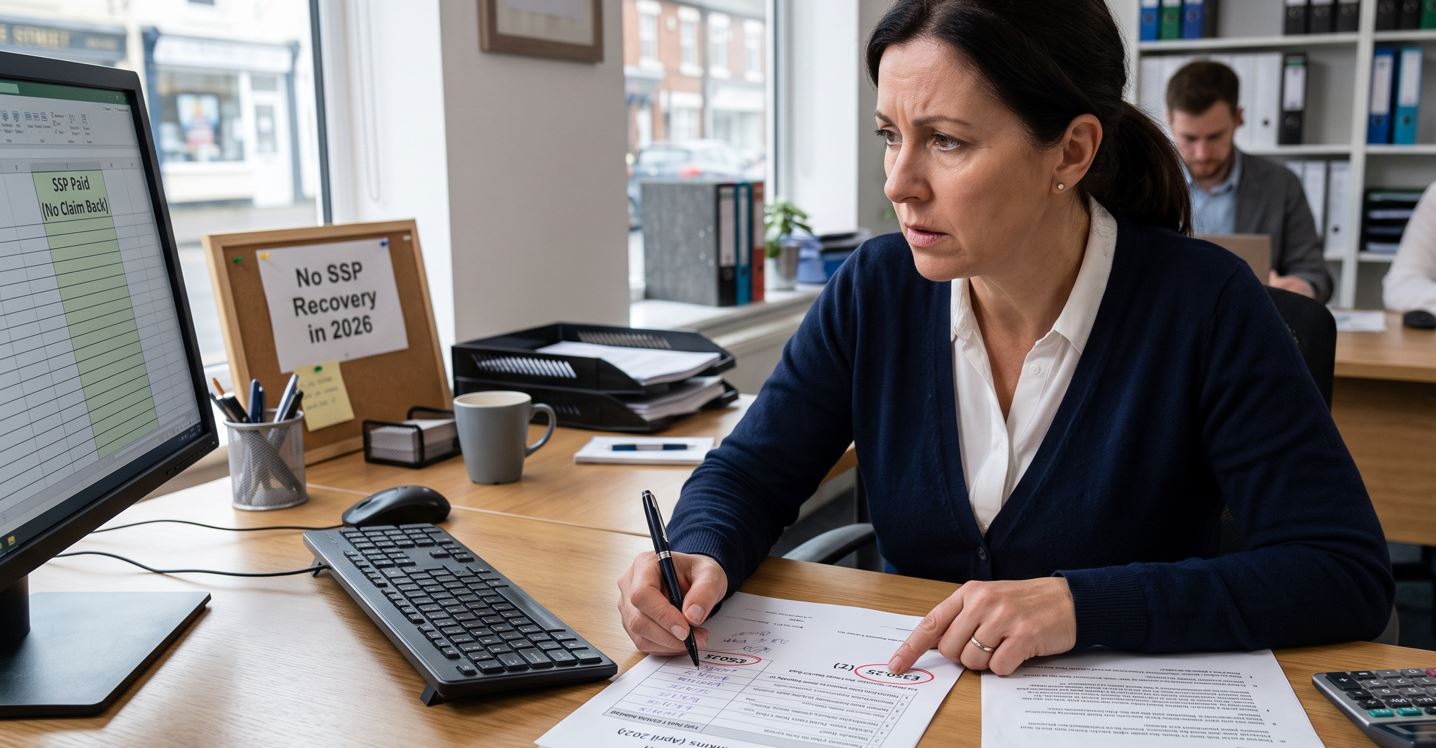
No, employers can no longer claim back Statutory Sick Pay (SSP).
The government is not going to refund you a single penny in 2026. Since the final Covid-19 schemes closed, the financial burden of statutory sickness absence falls 100% on the employer’s shoulders.
It is a bitter pill to swallow. HMRC essentially expects you to act as their welfare distributor—but without the courtesy of a reimbursement.
However, do not close this tab just yet. While you cannot claim the money back, leaving it at a simple “no” is bad for business. In this guide, we will break down exactly how you can legally mitigate these costs, avoid overpaying by mistake, and protect your company’s cash flow.
The History: When Did Employers Stop Reclaiming SSP?
It wasn’t always this bleak for business cash flow. I remember auditing payroll operations a decade ago when recovering these costs was just standard Tuesday admin.
So, when did employers stop being able to reclaim SSP? The reality is that the safety net has been dismantling in phases over the last decade.
The 2014 Permanent Abolition
Back in April 2014, the government pulled the plug on the Percentage Threshold Scheme (PTS).
Under the PTS, if your total SSP payments in a tax month exceeded 13% of your gross Class 1 National Insurance contributions, you could claim the excess back. It was a lifeline for small businesses hit by an unexpected wave of flu.
When the PTS was scrapped, the message from policymakers was clear: managing sickness absence is a business responsibility, not a state-funded one.
The Covid-19 Rebate Scheme (And its closure in 2022)
Then came the pandemic. For a brief, chaotic moment, the government reintroduced support.
The Coronavirus Statutory Sick Pay Rebate Scheme allowed SMEs to claim back up to two weeks of Covid-related SSP per employee. It was a chaotic administrative scramble, but it kept thousands of businesses afloat.
But that ship sailed on March 17, 2022. The scheme was shuttered for good. If your accountant or payroll software is still prompting you about SSP rebates in 2026, it is time to fire them—or at least run an urgent software update.
Who Bears the Cost of Statutory Sick Pay (SSP) in 2026?
You do. Period.
If you are wondering exactly who bears the cost of Statutory Sick Pay? The answer is the employer. You absorb the entirety of the statutory minimum required by law. It comes directly out of your operating margins.
This is why understanding the exact mechanics of the payout is no longer just an HR issue; it is a critical financial strategy.
Current SSP Rates and Employer Obligations
Let’s look at the financial hit. How much is SSP right now? While rates adjust slightly each tax year, the core obligation remains strict.
Here is a quick breakdown of your statutory responsibilities as an employer:
| SSP Element | Employer Obligation |
| Weekly Rate | “Currently £123.25 per week for the 2026/2027 tax year (this rate is reviewed and adjusted annually every April). |
| Maximum Duration | Up to 28 weeks per period of incapacity for work. |
| Qualifying Earnings | Employee must earn at least the Lower Earnings Limit (LEL) of £123 per week. |
| First 3 Days | Unpaid (These are known as “Waiting Days”). |
Pro tip: Always use the official government SSP calculator to ensure you are paying the exact legal minimum to the penny, avoiding costly manual errors.
Can Small Employers Claim Back SSP from HMRC?
This is arguably the most common—and heartbreaking—myth I hear from independent business owners.
“Surely, as a startup with only five employees, claiming back SSP from HMRC is still an option for us?”
Absolutely not. Can small employers claim back SSP? No.
The law in 2026 treats a local pub with three employees exactly the same as a massive multinational corporation. There is no special SME relief, no startup exemption, and no backdoor tax credit specifically for sickness absence.
When your lead developer or head chef goes down with a bad back for two months, you are paying their SSP while simultaneously bleeding cash to hire a temporary replacement. It hurts. Which brings us to the most important part of this guide.
How to Manage and Reduce the Financial Impact of SSP
This is where institutional sites like ACAS and GOV.UK leave you hanging. They dictate the law, but they don’t care about your profit margins.
Since you cannot claim the money back, your only defense is aggressive, hyper-accurate absence management. Here is my battle-tested framework for mitigating SSP costs.
Tracking Waiting Days and Qualifying Days accurately
I remember once auditing a client’s payroll where they had been blindly paying SSP from day one for over two years. The financial bleed was staggering—and entirely preventable.
You do not pay SSP for the first three Qualifying Days of a sickness absence. These are called Waiting Days.
- Qualifying Days: These are the days your employee normally works.
- The Rule: If someone is sick from Monday to Friday, you only pay SSP for Thursday and Friday.
Do not be the “nice guy” who accidentally pays from day one just because your payroll software wasn’t configured correctly. Stick to the statutory minimum unless your specific employment contracts dictate enhanced sick pay.
Implementing a Robust Absence Management Policy
Your strongest weapon against ballooning sick pay is friction. Not illegal friction, but procedural discipline.
- Return to Work Interviews: Conduct a brief, documented 5-minute chat every single time someone returns from sick leave. It shows you care, but it also heavily discourages “duvet days” and serial absenteeism.
- Enforce Fit Note Deadlines: Employees can self-certify for the first 7 days. On day 8, demand a Fit Note from a medical professional. No Fit Note? You are legally within your rights to withhold SSP.
- Monitor Patterns: Use your HR software to flag trends. Is a specific employee miraculously sick every time there’s a major rugby tournament? Data doesn’t lie.
Exploring Commercial Absence Insurance
If you run a small operation where losing one person halts production, you need a backup plan that isn’t the government.
Look into Key Person Insurance or specific commercial absence insurance policies.
These schemes won’t “claim back SSP from HMRC”, but they will pay out a lump sum to the business if a crucial employee is incapacitated for a prolonged period. This covers the SSP cost and funds their temporary replacement. For SMEs, this is the best option by a landslide to protect against catastrophic cash flow interruptions.
Frequently Asked Questions (FAQ)
No. There are no active government schemes in 2026 that allow employers to reclaim Statutory Sick Pay. The cost is borne entirely by the business.
The employer pays 100% of the Statutory Sick Pay directly to the employee through normal payroll processes. The government does not contribute or refund this amount.
While you cannot “claim it back” as a refund, SSP is a legitimate business expense. Ensure it is recorded properly in your payroll so it correctly reduces your taxable company profit at the end of the financial year.
If you genuinely face insolvency and cannot pay your employees their statutory rights, you must contact the HMRC Employer Helpline immediately. In extreme insolvency cases, HMRC may step in, but this usually involves the liquidation or administration of your business.